Source Injection Moulded Turnover Box for Storage Packaging Transport
Find 30 injection moulded turnover box options from Chinese manufacturers. Compare specifications like material, cavity count, and customization for storage, packaging, and transport needs.
Key considerations
Products List




Comprehensive Sourcing Guide
Strategic Sourcing Guide for Injection Molded Turnover Boxes
Understanding Technical Specifications and Design Variability
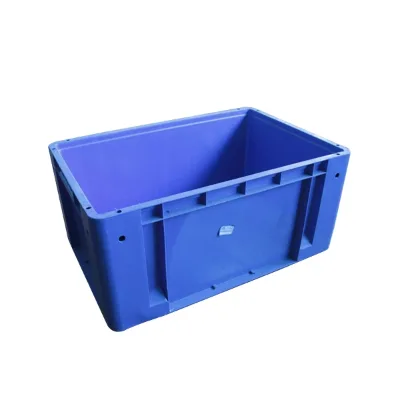
When sourcing injection molded turnover boxes, buyers must first recognize that the product category encompasses a wide spectrum of technical configurations rather than a single uniform item. The core keyword "injection moulded turnover box" implies a container designed for repeated handling, storage, and transport, typically fabricated through high-pressure injection molding processes. Based on available market data, the material composition frequently centers on Polypropylene (PP), a choice driven by its balance of chemical resistance, impact strength, and cost-effectiveness for industrial applications. However, the specific application dictates the necessary engineering. For instance, some listings indicate suitability for living room storage, while others target heavy-duty industrial environments involving car manufacturing, household appliances, or electronics.
The design architecture of these boxes varies significantly based on the intended workflow. A critical observation in the current market is the prevalence of "nestable" styles, which allow empty units to be stacked vertically to minimize return logistics costs. Conversely, other specifications point to "turnover box/crate/container" configurations that may prioritize stacking strength over nesting capability. The physical dimensions are often categorized by size classes such as "Medium" or "Large," though exact millimeter measurements are rarely standardized across all suppliers. Buyers should verify the specific model numbers, such as HBE-LB-8 or DTM-054-R567-2, as these identifiers often correspond to unique cavity counts and dimensional tolerances. Furthermore, the production method is almost exclusively injection molding, utilizing either single-cavity or multi-cavity molds. The choice between a "Hot Runner" and "Cold Runner" system is a vital technical decision; hot runner systems generally offer better material efficiency and faster cycle times, whereas cold runner systems might be preferred for specific material types or lower volume runs. The cycle time itself can vary, with average figures observed around 45 seconds, but this is highly dependent on the part geometry and mold complexity.
Compliance, Certification, and Standard Verification
Navigating the compliance landscape for industrial plastic containers requires a rigorous verification process, as the market presents a fragmented array of standards. Buyers should not assume that a single certification covers all operational requirements. The observed data indicates a mix of standards, including SGS CE, COA (Certificate of Analysis), and specific mold standards like HASCO. Additionally, some product listings reference a "9T" standard, which may relate to specific load-bearing capacities or internal quality benchmarks, though its universal applicability is not guaranteed without direct supplier confirmation.
It is crucial to distinguish between material certifications and process certifications. A Certificate of Analysis (COA) typically verifies the chemical composition of the raw plastic resin, ensuring it meets purity and safety requirements for the intended use, such as food contact or electronic component storage. In contrast, standards like SGS CE often relate to the manufacturing facility's quality management or the product's safety compliance in specific regions. While ISO 9001 is frequently cited in the broader industry as a baseline for quality management, specific listings in the current data pool do not universally confirm this status for every turnover box variant. Therefore, buyers must explicitly request current, valid certificates for the specific batch or production line. Relying on general market knowledge regarding ISO 9001:2000 or similar versions without verifying the supplier's current accreditation status can lead to procurement risks. The "Customized" standard noted in some listings further emphasizes that compliance is often a bespoke agreement rather than a fixed, off-the-shelf attribute.
Cost Drivers and Pricing Dynamics
The pricing structure for injection molded turnover boxes is influenced by a complex interplay of factors, resulting in a broad observed price range from $0.02 to $5,000 USD. This variance is not indicative of quality differences alone but rather reflects the distinction between purchasing a single unit, a small batch, or a full production run including the mold tooling. The lower end of the spectrum typically represents the cost of the finished container itself, often in bulk quantities, while the higher end may encompass the cost of the custom mold, design fees, and setup charges for ODM (Original Design Manufacturing) or OEM (Original Equipment Manufacturing) projects.
Material costs constitute a primary driver, with the price of Polypropylene fluctuating based on global crude oil markets. However, the complexity of the mold is often the most significant cost variable. Molds designed with "Multi Cavity" configurations allow for higher production volumes per cycle, reducing the unit cost, but require a higher initial investment. The "Mould Material" also plays a role; specifications citing P20 and 718 steel indicate high-grade tooling suitable for long production runs, whereas lower-grade steels might be used for shorter runs or prototyping. Additionally, the "Process Combination Type" affects pricing. A "Compound Die" or complex "Single-Process Mode" may involve more intricate machining and assembly, increasing the tooling cost. Buyers should also consider the "Mould Design" requirements, such as the need for 2D and 3D design software integration, which adds to the engineering overhead. The "Runner" design, whether hot or cold, further impacts the cost structure, with hot runner systems carrying a premium due to their complexity and maintenance requirements.
Typical Applications and Usage Scenarios
The versatility of injection molded turnover boxes allows them to serve diverse industries, ranging from consumer goods to heavy manufacturing. The observed data highlights applications in "Car," "Household Appliances," and "Electronic" sectors, suggesting that these containers are often used for housing components, organizing parts on assembly lines, or transporting finished goods. In these contexts, the boxes must withstand repeated handling, potential chemical exposure, and stacking loads. For example, in the electronics industry, the boxes might need to be anti-static or have specific dimensions to fit automated handling systems.
Conversely, the "Living Room" and "Home Use" applications indicate a consumer-facing market where aesthetics and space efficiency are paramount. Here, the "Nestable" feature becomes a critical selling point, as it reduces storage volume when the boxes are not in use. The "Usage" category often overlaps with "Packaging," implying that these boxes serve as the primary or secondary packaging for shipping. The "Installation" method, noted as "Fixed" in some specifications, suggests that certain turnover box systems are integrated into shelving units or conveyor systems, requiring precise dimensional tolerances. The "Surface Finish Process," such as polishing, is another indicator of the application; a polished finish might be required for clean-room environments or consumer-facing displays, while a textured finish might be preferred for industrial durability to hide scratches.
Supplier Evaluation and Geographic Considerations
Evaluating suppliers for injection molded turnover boxes requires a careful assessment of their geographic location, manufacturing capabilities, and design infrastructure. The data points to a concentration of manufacturing in China, with specific hubs in Suzhou, Jiangsu; Shenzhen, Guangdong; and Zhejiang. Each region may offer different advantages; for instance, Shenzhen is often associated with high-tech electronics supply chains, while Zhejiang might have a strong focus on general manufacturing and logistics.
When assessing a supplier, buyers should verify their "Design Software" capabilities, such as the use of UG (Unigraphics) for mold design, which ensures precision in the final product. The "Mould Struction" and "Mould Cavity" details are also vital; a supplier offering "Big Gate" designs or specific "Runner Design" options demonstrates a deeper technical understanding of the molding process. Furthermore, the "Customized" nature of many listings means that the supplier's ability to handle ODM and OEM requests is a key differentiator. Buyers should inquire about the "Mould Design" process, specifically whether the supplier provides 2D and 3D drawings for approval before tooling begins. The "QC" (Quality Control) protocols, such as "100% Testing," are essential indicators of a supplier's commitment to consistency. However, buyers must treat these claims as observations to be verified through audits rather than guaranteed facts. The "Payment Terms," often observed as 50% and 50% splits, are standard but should be negotiated based on the project scope and risk profile.
Quality Control and Long-Term Procurement Strategy
Ensuring the longevity and reliability of injection molded turnover boxes requires a robust quality control strategy that extends beyond the initial production run. The "100% Testing" mentioned in some listings is a strong starting point, but buyers should also demand specific test results related to load-bearing capacity, impact resistance, and dimensional accuracy. The "Standard" of "Customized" in some listings suggests that quality benchmarks may be agreed upon on a case-by-case basis, making it essential to define these metrics in the purchase agreement.
Long-term procurement considerations include the "Packing" specifications, which can vary from "Export Carton" to "Wooden Box" or "Wooden Case." Proper packing is crucial for preventing damage during transit, especially for high-value molds or fragile finished goods. The "MOQ" (Minimum Order Quantity) ranges from 1 to 2000 units, offering flexibility for both prototyping and mass production. However, buyers should be aware that lower MOQs often come with higher unit costs due to the amortization of setup costs. The "Lead Time" is another critical factor, influenced by the "Cycle Time" of the mold and the complexity of the "Process Combination Type." While an average cycle time of 45 seconds is noted, actual production timelines will depend on the number of cavities and the specific "Shaping Mode" employed.
To mitigate risks, buyers should establish a clear communication channel for design changes and quality issues. The "Design Software" capabilities of the supplier, such as UG, facilitate rapid iteration and modification of the mold design if changes are required. Additionally, verifying the "Material" source and ensuring it is consistent with the specified PP grade is vital for maintaining product integrity over time. Finally, the "Standard" of "HASCO" or other mold standards should be referenced in the technical specifications to ensure that the mold components are compatible with industry norms, facilitating easier maintenance and repair in the future. By integrating these factors into a comprehensive procurement strategy, buyers can secure a reliable supply of high-quality injection molded turnover boxes tailored to their specific operational needs.
FAQs
What material is used for injection moulded turnover boxes?
Polypropylene is the primary material used for these boxes due to its chemical resistance and impact strength. Some listings also specify P20 and 718 steel for the mold cavities themselves to ensure durability during high-volume production runs.
Can I get custom designs for injection moulded turnover boxes?
Yes, customization is available with options for ODM and OEM services. Buyers can request specific designs using UG software, with mold cavities ranging from single to multi-cavity configurations to meet unique storage or transport needs.
Which certifications apply to injection moulded turnover boxes?
Certifications vary by supplier and include SGS CE, COA, and specific mold standards like HASCO. Some products also reference a 9T standard or customized compliance, so buyers must verify the specific certificate for their intended application.
How does the nesting style affect storage efficiency?
Nestable styles allow empty boxes to be stacked vertically, significantly reducing return logistics costs and storage volume. This design is particularly useful for living room storage or scenarios where space optimization is a priority during non-use periods.
What is the typical cycle time for injection moulding these boxes?
The average cycle time is approximately 45 seconds, though this depends on part geometry and mold complexity. Multi-cavity molds can increase production volume per cycle, while runner designs like hot or cold systems also influence the overall timing.
Where are injection moulded turnover box manufacturers located?
Manufacturers are concentrated in China, with specific hubs in Suzhou Jiangsu, Shenzhen Guangdong, and Zhejiang. These locations offer access to diverse supply chains, from electronics components to general household appliance packaging solutions.
What are the payment terms for sourcing these boxes?
Standard payment terms often involve a 50% deposit and 50% balance upon completion or shipment. Buyers should confirm these terms alongside the minimum order quantity, which can range from 1 to 2000 units depending on the supplier.